
Emotional Intelligence Isn’t Soft. It’s Your Leadership Superpower.
13th July 2026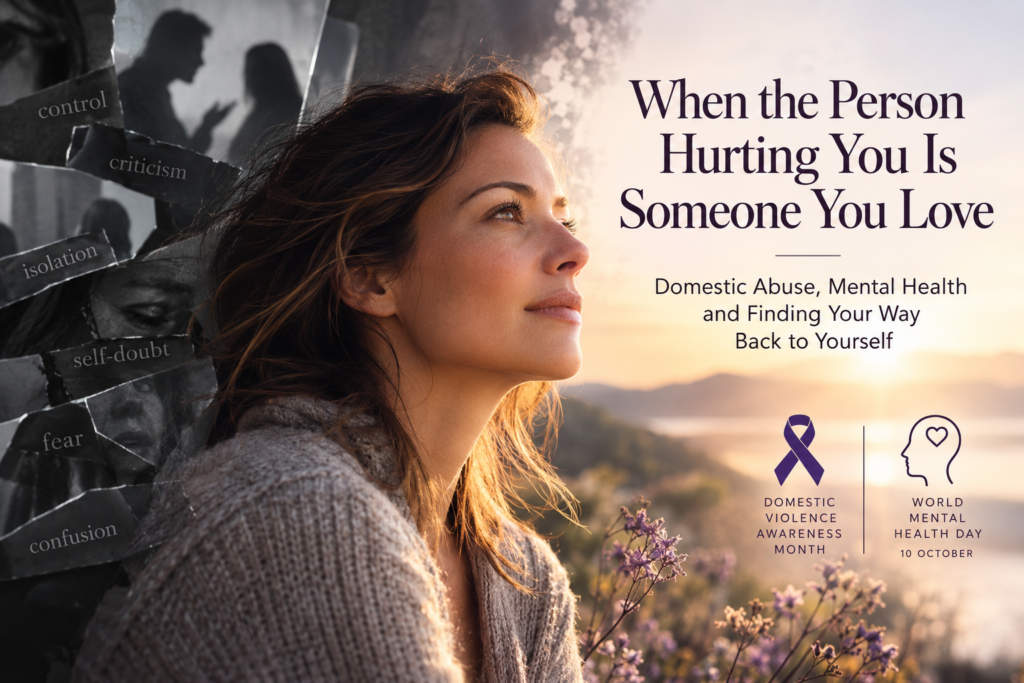
October is Domestic Violence Awareness Month. And on 10 October, we also mark World Mental Health Day.
For me, those two conversations belong together.
Because when we talk about mental health, we often talk about anxiety, depression, panic attacks, low self-esteem, insomnia and stress.
But sometimes we need to ask a different question.
What happened to you?
Or perhaps:
What is still happening to you?
Because sometimes anxiety isn’t coming from nowhere.
Sometimes you’re anxious because you’ve spent months or years monitoring somebody else’s moods.
Sometimes you can’t sleep because your nervous system has learned that it isn’t safe to completely switch off.
Sometimes your confidence has disappeared because you’ve been criticised, belittled or made to question yourself so often that you’ve stopped trusting your own judgement.
Sometimes what looks like “overthinking” is actually hypervigilance.
And sometimes what you have been calling a difficult relationship is something much more serious.
Domestic abuse doesn’t always look the way we expect
When people hear the words domestic violence, many still picture physical violence.
And, of course, physical violence is domestic abuse.
But abuse can also be emotional, psychological, sexual, financial, controlling or coercive.
It can be someone monitoring where you go.
Controlling money.
Isolating you from friends or family.
Checking your phone.
Humiliating you.
Threatening you.
Punishing you with silence.
Constantly moving the goalposts.
Convincing you that events didn’t happen the way you remember them.
Making you feel that everything is your fault.
Or slowly chipping away at your confidence until you barely recognise the person you have become.
That’s one of the reasons I called my book Death by a Thousand Cuts.
Because sometimes there isn’t one enormous event you can point to and say, “There. That’s when it became abusive.”
Instead, there are hundreds of smaller moments.
A criticism.
A put-down.
A threat disguised as a joke.
Another apology you find yourself making when you don’t really know what you’ve done.
Another evening spent trying to keep the peace.
Another piece of yourself made smaller.
One cut might seem insignificant.
A thousand can change you.
“But they can be lovely too”
This is one of the things that can make unhealthy and abusive relationships incredibly confusing.
The person causing the pain isn’t necessarily horrible every minute of every day.
There may be affection, apologies, promises, wonderful memories and periods when everything feels normal again.
You may still love them.
You may remember who they were at the beginning.
You may keep thinking that if you could just find the right words, behave differently, stop upsetting them or help them understand how much they’re hurting you, things could go back to how they were.
That doesn’t make you stupid.
It makes the situation complicated.
And it is one of the reasons the question “Why didn’t you just leave?” can be so deeply unhelpful.
Leaving isn’t always a single decision.
There may be children, finances, housing, fear, shame, isolation, threats, practical barriers and emotional attachment involved.
And after a long period of having your reality questioned, you may no longer trust yourself enough to know whether leaving is the “right” thing to do.
What living like this can do to your mental health
Living with fear, unpredictability, criticism or control can have a profound effect on emotional wellbeing.
You may notice yourself becoming anxious about things that never used to bother you.
You might rehearse conversations before having them.
You may become extremely sensitive to changes in somebody’s tone of voice or facial expression.
You might constantly ask other people:
“Was I wrong?”
“Am I being unreasonable?”
“Maybe I’m overreacting?”
You might struggle to make decisions.
You might experience panic, low mood, poor sleep, physical tension or exhaustion.
You may withdraw from people.
Or become incredibly good at appearing absolutely fine.
That last one matters.
Because people experiencing abuse don’t necessarily look broken.
They can run businesses.
Raise children.
Lead teams.
Care for everybody else.
Turn up beautifully dressed.
Laugh with friends.
Post photographs on social media.
And still go home and walk on eggshells.
And then there’s what happens afterwards
Leaving an abusive or narcissistic relationship doesn’t automatically make everything better overnight.
Sometimes that’s when the processing begins.
When you’ve been surviving, your job is simply to get through it.
Once there is finally some space, your brain can begin to make sense of what happened.
That can bring grief.
Anger.
Confusion.
Fear.
Self-blame.
And one particularly painful question:
How did I let this happen to me?
I would love us to replace that question.
Instead of:
“What’s wrong with me?”
Try:
“What happened to me, what did I learn to do to survive it, and what do I need now?”
That is a very different conversation.
Therapy isn’t about telling you what to do
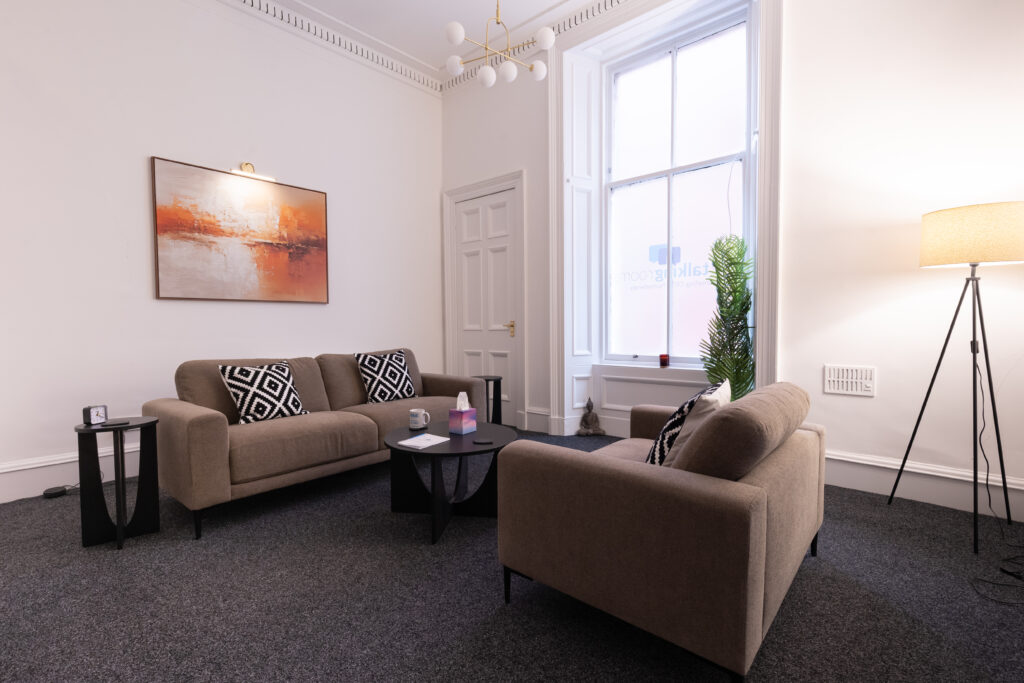
At The Talking Rooms, our job isn’t to tell someone to leave their relationship.
Nor is therapy about telling you how you should feel about what has happened.
It can provide a confidential space to understand your experiences, recognise patterns, rebuild trust in your own judgement and begin reconnecting with yourself.
For some people, therapy starts while they are still trying to understand what is happening.
For others, it begins months or even years after a relationship has ended.
There isn’t a deadline on recovery.
And you don’t need to have everything neatly figured out before you ask for help.
Finding your way back to yourself
Recovery isn’t simply about “getting over” another person.
It can be about coming home to yourself.
Learning that saying no doesn’t make you difficult.
That boundaries aren’t cruel.
That somebody else’s anger isn’t automatically your responsibility.
That peace doesn’t need to be earned.
That you are allowed to have needs.
And perhaps most importantly, learning to trust that little voice inside you again.
The one you may have spent years being taught to ignore.
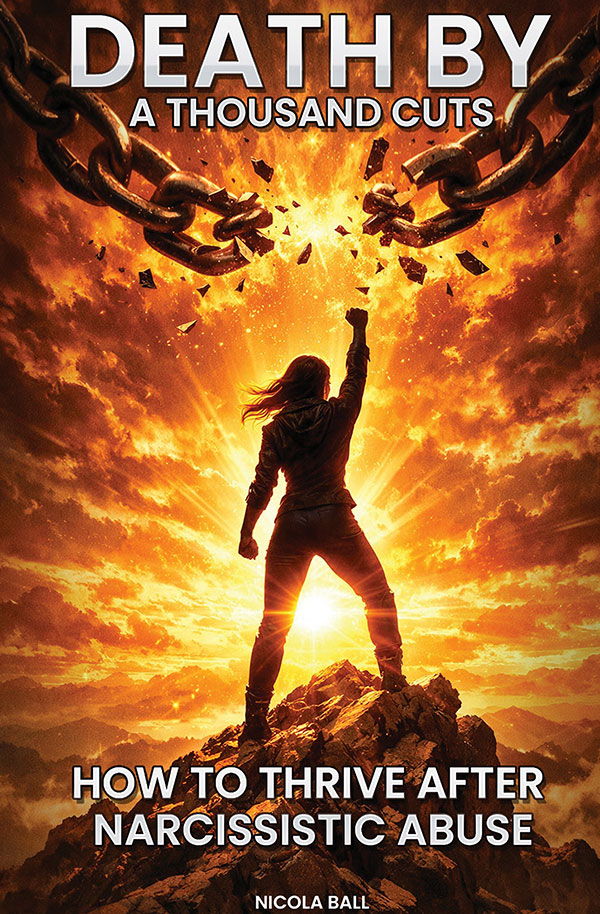
Death by a Thousand Cuts
I wrote Death by a Thousand Cuts: How to Thrive After Narcissistic Abuse because I know how difficult it can be to understand something when you’re standing in the middle of it.
It explores the impact of narcissistic abuse and, importantly, what comes next.
Not simply surviving.
But rebuilding.
You can find Death by a Thousand Cuts on Amazon here:
Read Death by a Thousand Cuts on Amazon
You don’t have to wait until things become unbearable
This World Mental Health Day, I’d like to leave you with one thought.
You don’t need to reach breaking point before you’re “allowed” to ask for support.
Perhaps something in this article feels familiar.
Perhaps you’ve left a difficult relationship but realise you’re still carrying it around with you.
Perhaps your confidence has disappeared.
Perhaps you’re anxious, exhausted or constantly questioning yourself.
Or perhaps you can’t quite explain what’s wrong. You just know you don’t feel like you anymore.
That is enough reason to talk.
The Talking Rooms offers confidential counselling, CBT and psychotherapy, with appointments available both online and face-to-face.
You can start with a free consultation. There is no obligation to continue. It’s simply a conversation about what is happening and whether we might be able to help.
You have spent enough time surviving. You are allowed to start thinking about what living might look like.
If you are currently experiencing domestic abuse or are concerned for your immediate safety, specialist domestic-abuse services can help you consider your options and safety. If you are in immediate danger, contact the emergency services.
Need specialist support?
If you are experiencing domestic abuse, coercive control or feel unsafe in your relationship, specialist support is available.
Scotland’s Domestic Abuse and Forced Marriage Helpline: 0800 027 1234, available 24 hours a day.
Scottish Women’s Aid: Information and support for women experiencing domestic abuse, including help finding your local Women’s Aid service.
Samaritans: Call 116 123, free, 24 hours a day, if you need someone to talk to.
NHS 24: Call 111 for urgent mental health support in Scotland.
Immediate danger: Call 999. If you cannot speak safely on a mobile, press 55 when prompted.
Please consider your online safety. If you are worried that someone may be monitoring your phone, emails or internet use, consider accessing support from a safe device.
The Talking Rooms provides counselling and psychological therapy but is not an emergency or domestic abuse crisis service. If you are currently at risk, please contact a specialist service or the emergency services.