

Therapy Isn’t a Cost. It’s a Commitment to Yourself
14th January 2026
When Everything Feels Too Much: Understanding Emotional Overwhelm and How to Reset
4th March 2026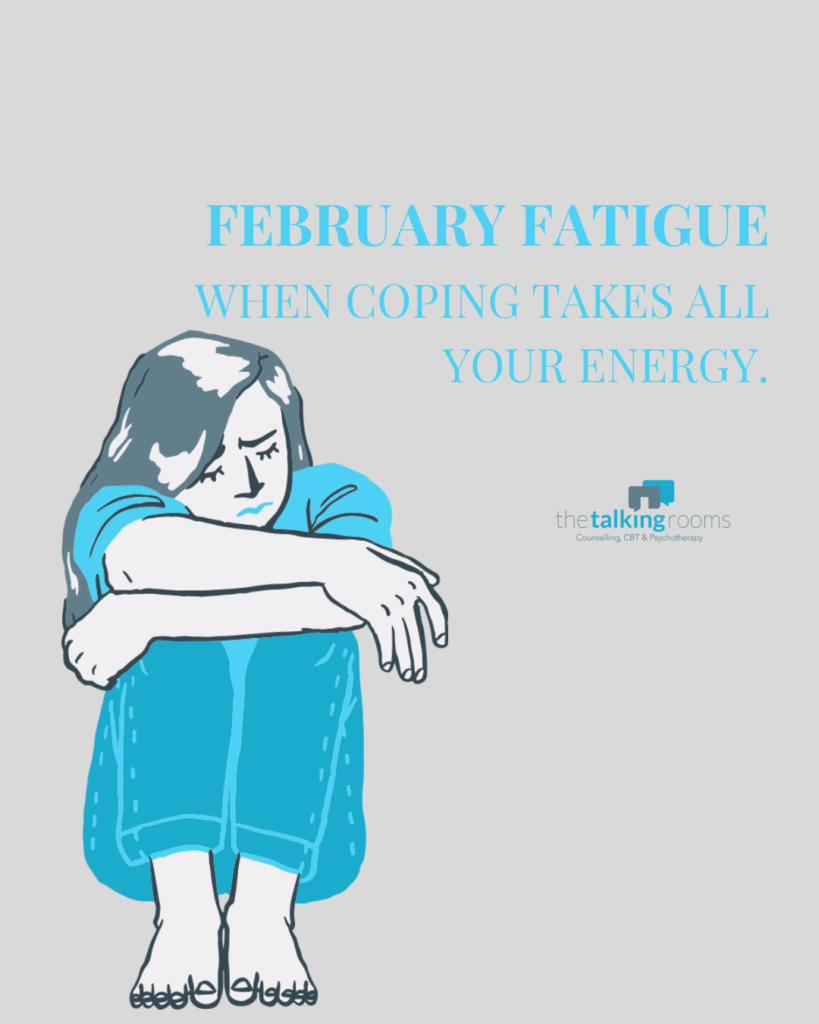
Why February Can Feel Harder Than Any Other Month
January arrives with promises.
New routines. Fresh starts. Gym memberships and planners still smell of optimism.
February arrives with… reality.
The adrenaline of change has worn off.
The days are still short.
Energy is low.
Motivation slips.
And many people start to notice something uncomfortable creeping in:
A quiet emotional fatigue.
At The Talking Rooms, February is often when clients say things like:
- “I don’t feel depressed, I just feel… flat.”
- “I’m coping, but it’s taking all my energy.”
- “I can’t seem to get myself back on track.”
- “I’m tired of being tired.”
This isn’t failure.
It’s nervous system exhaustion.
And it’s more common than most people realise.
What Is Emotional Fatigue?
Emotional fatigue happens when your mind and nervous system have been running in survival mode for too long.
Not crisis.
Not collapse.
Just constant coping.
You may still be:
- Working
- Parenting
- Showing up
- Functioning
But internally, you feel:
- Drained
- Irritable
- Disconnected
- Overwhelmed
- Foggy
- Less like yourself
This is especially common in people who are:
- High-achieving
- Responsible
- Caring for others
- Used to “getting on with it”
- Emotionally intelligent but emotionally overloaded
You don’t fall apart.
You quietly run out of space.
Why Winter Amplifies Emotional Strain
There are three key psychological reasons February is emotionally difficult:
1. The body is still in low-light mode
Short days affect sleep, mood and motivation. Vitamin D drops. Energy dips. Your system is still in winter defence mode.
2. The pressure to “be fine” returns
After January’s self-care focus fades, expectations rise again:
- Work targets
- Family demands
- Social obligations
- Financial stress
There is less permission to slow down.
3. Unprocessed stress catches up
By February, many people start feeling the impact of:
- A stressful year
- Relationship strain
- Workplace pressure
- Grief or loss
- Burnout
- Anxiety that was ignored
The mind eventually asks for attention.
Emotional Fatigue vs Depression or Anxiety
Emotional fatigue often sits between stress and mental illness.
It doesn’t always look like:
- Panic attacks
- Tears
- Hopelessness
It looks like:
- Low motivation
- Overthinking
- Disconnection
- Short temper
- Constant tiredness
- Feeling “not quite right”
This is where therapy is most powerful.
Not as crisis management.
But as emotional maintenance.
Just like physiotherapy prevents injury from becoming permanent damage, therapy helps prevent emotional strain becoming long-term illness.
Why Therapy in February Makes Sense
Many people wait until they are at breaking point to ask for help.
But February is often the perfect intervention point.
It is the moment when you can say:
“I don’t want to carry this into spring.”
“I want to understand what’s draining me.”
“I want to reset before this becomes worse.”
At The Talking Rooms, we see therapy used effectively for:
- Stress and burnout
- Anxiety and overthinking
- Low mood
- Work pressure
- Relationship tension
- Loss of direction
- Self-confidence issues
- Trauma responses
- Feeling emotionally stuck
Therapy is not about fixing what is broken.
It is about restoring balance to a nervous system that has been holding too much.
What Happens in Therapy for Emotional Fatigue?
A common myth is that therapy only looks backwards.
In reality, much of the work is practical and forward-focused:
You learn to:
- Understand what is draining your emotional energy
- Recognise unhelpful thinking patterns
- Regulate your stress response
- Set healthier boundaries
- Reconnect with your needs
- Build emotional resilience
Many clients say:
“I didn’t realise how much I was carrying until I put it down.”
Why High-Functioning People Struggle to Ask for Help
The people who benefit most from therapy are often the ones who delay it longest.
Because they are:
- Capable
- Independent
- Used to managing
- Used to being the ‘strong’ one
But emotional strength is not about coping endlessly.
It is about knowing when to pause and recalibrate.
Therapy gives you a space that is:
- Confidential
- Non-judgemental
- Structured
- Supportive
- Evidence-based
It is one of the few places in life where your inner world becomes the priority.
A Gentle February Reset
Instead of pushing harder this month, consider a different question:
“What does my nervous system need right now?”
That may be:
- Rest
- Boundaries
- Support
- Clarity
- A conversation you’ve been avoiding
- Professional help
February does not need reinvention.
It needs recalibration.
How The Talking Rooms Can Help
At The Talking Rooms, we offer integrative, evidence-based therapy for adults, couples and young people across Glasgow and online.
Our therapists work with:
- Anxiety
- Stress
- Burnout
- Trauma
- Low mood
- Relationships
- Self-esteem
- Life transitions
We believe therapy should feel:
- Safe
- Professional
- Compassionate
- Practical
- Tailored to you
You do not need to be in crisis to begin.
You only need to feel that something needs attention.
Take the First Step This February
If February feels heavier than it should, you are not alone.
And you do not have to carry it quietly.
You can book:
to explore whether therapy feels right for you.
Sometimes the most powerful change is not doing more.
It is being supported.
Nicola